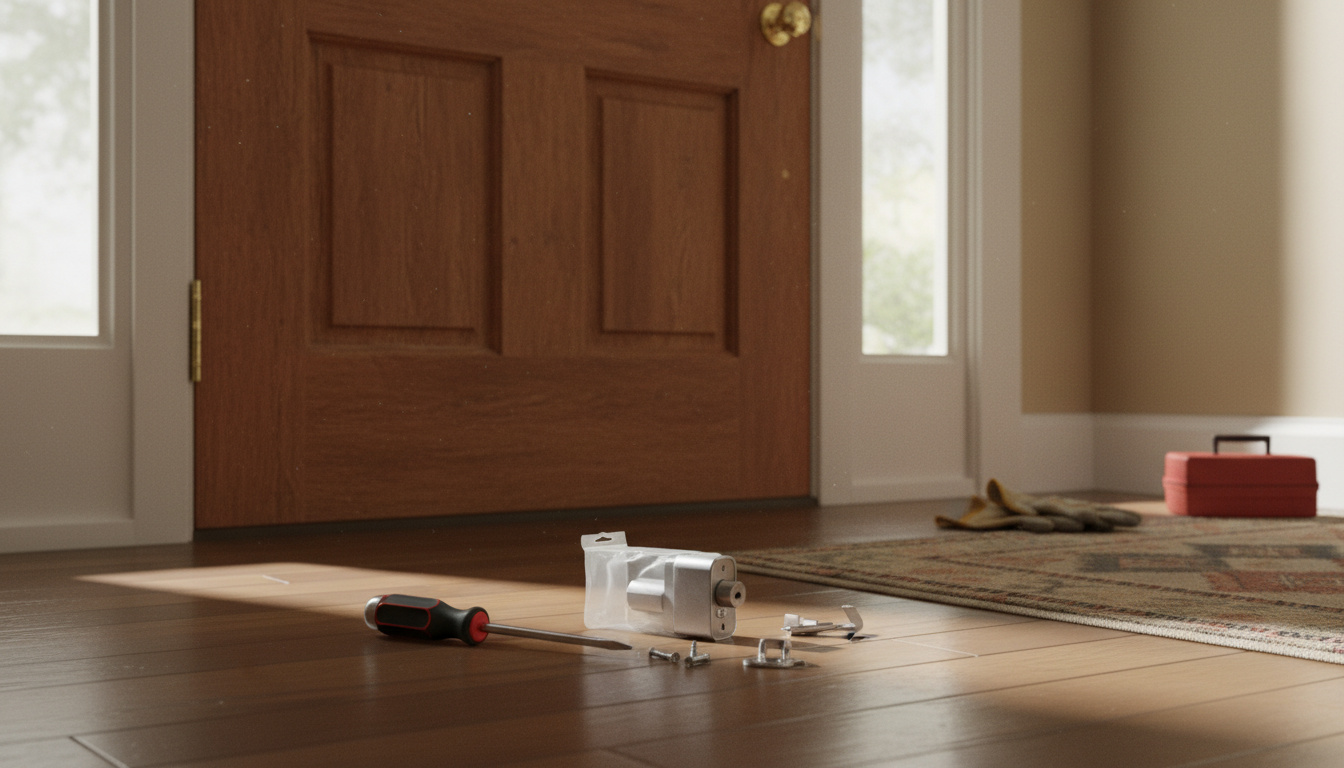

Introduction
Replacing a door lock represents one of the most impactful yet manageable improvements homeowners can undertake. A properly installed deadbolt or handle set not only secures your property but also updates the aesthetic of your entryway. While locksmiths provide professional installation, most standard lock replacements require only basic hand tools and thirty minutes of careful work. Understanding the mechanics behind your door maintenance needs ensures you select appropriate hardware for your specific door thickness and backset dimensions.
Component Overview
Deadbolts
Single and double-cylinder options offer varying security levels for entry points. Single-cylinder models operate with a thumb turn inside and key outside, while double-cylinder variants require keys for both sides.
Handle Sets
These combine keyed entry with decorative exterior plates. Installation requires precise alignment between the deadbolt and handle mechanisms.
Smart Locks
Electronic variants provide keyless entry through WiFi or Bluetooth connectivity. Battery life and weather resistance vary significantly between models.
Strike Plates
The metal receptacle receiving the bolt determines forced-entry resistance. Heavy-duty strike plates with three-inch screws anchor directly into framing members.
Professional Insights
Understanding the relationship between door preparation and lock longevity prevents premature failure. Many installation issues stem from misaligned strike plates or incomplete bore holes rather than defective hardware. Consumer Reports testing standards reveal that installation quality impacts security performance as significantly as the lock’s internal mechanism. For complex smart home security systems, professional consultation ensures compatibility with existing automation protocols.
Hardware Comparison
| Lock Type | Security Grade | Installation Time | Tool Requirements |
|---|---|---|---|
| Standard Deadbolt | ANSI Grade 1-3 | 20-30 minutes | Screwdriver, Chisel |
| Smart Lock | Varies by Model | 30-45 minutes | Drill, Screwdriver |
| Mortise Lock | Commercial Grade | 60-90 minutes | Mortise Jig, Chisels |
| Handle Set | ANSI Grade 2-3 | 25-35 minutes | Screwdriver, Tape Measure |
Installation Details
Begin by removing existing hardware. Unscrew the interior thumb turn or handle, then extract the exterior cylinder. Remove the deadbolt mechanism from the door edge. Clean the bore holes thoroughly, removing wood splinters or old paint that could obstruct new components. This Old House installation guidelines emphasize verifying backset measurements—typically 2-3/8 or 2-3/4 inches—before purchasing replacement units.
Insert the new deadbolt mechanism ensuring the top faces upward, marked by the word UP engraved on the housing. Secure with provided screws, avoiding overtightening that could warp the bolt housing. Attach the exterior cylinder, feeding the tailpiece through the bolt mechanism. Align interior components and secure with mounting screws. Family Handyman tool recommendations suggest using a carpenter’s square to ensure strike plate alignment with the bolt path.
Installation Sequence
- Remove old hardware and strike plates completely
- Measure door thickness and backset distance
- Enlarge bore holes if converting from handle to deadbolt
- Test fit all components before final tightening
- Install strike plate with screws reaching structural framing
- Check bolt extension and retraction smoothness
- Verify key operation from both sides if applicable
Common Clarifications
Many homeowners assume all deadbolts provide equal security. ANSI/BHMA certification standards actually classify locks into three grades, with Grade 1 offering the highest residential security. Another misconception involves smart lock vulnerability. Hardwired models eliminate battery concerns but require drilling for low-voltage wiring. Schlage technical specifications indicate that Grade 1 deadbolts withstand ten strikes of 150 foot-pounds of force, while Grade 3 models endure only two such impacts.
Security Analysis
Physical security represents only one layer of protection. National Crime Prevention Council recommendations suggest integrating lock upgrades with improved lighting and visibility. Mortise locks offer superior durability for high-traffic commercial applications but require precise door preparation that often exceeds DIY capabilities. Cylindrical locks dominate residential markets due to standardized door preparations, though they provide less resistance to forced entry than mortise alternatives.
Expert Perspectives
The most secure lock installed poorly becomes the weakest link. We see more failures from misaligned strikes and short screws than from lock picking or drilling. Residential security starts with proper strike plate installation using screws that anchor into the structural framing behind the door jamb.
Security Hardware Association Technical Director
Summary
Successful lock replacement balances hardware selection with meticulous installation technique. Whether upgrading to electronic access control or replacing worn cylinder mechanisms, attention to backset measurements, strike plate security, and bolt alignment determines long-term performance. While standard deadbolt replacement remains accessible to most homeowners, complex mortise installations or historic door modifications benefit from professional locksmith services to preserve door integrity and warranty coverage.
Frequently Asked Questions
Can I replace a door lock without changing the door frame?
Standard cylindrical locks and deadbolts fit existing bore holes in most modern doors. You only need to replace the strike plate on the frame, which requires minimal screw holes. If upgrading from a handle to a deadbolt, you must drill an additional hole through the door edge.
What tools are absolutely necessary for lock replacement?
A Phillips head screwdriver and tape measure handle most residential installations. A chisel helps mortise strike plates flush with the jamb. For new door preparations, hole saws and spade bits create clean bore holes. Smart locks may require drilling for wiring or additional mounting plates.
How do I know if my new lock will fit my door?
Measure door thickness, backset distance from door edge to bore center, and bore diameter. Standard residential doors measure 1-3/8 or 1-3/4 inches thick with 2-3/8 or 2-3/4 inch backsets. Most lock packaging specifies compatible dimensions.
Weitere Artikel





Oliver Sommer ist Branchenredakteur bei Sonderanalyse.